
🚧The Blog Is Currently Under Construction🚧
Hey there! Thanks for stopping by! You may notice some broken links, missing content, or inconsistent formatting across the posts on this blog. I’m aware of these issues and am actively working to resolve them as quickly as possible. I truly appreciate your patience during this transition and hope you’ll continue to explore and engage with my content. Please don’t let these temporary errors reflect on the quality and care I bring to my work as a publishing professional and content creator. Thanks for your support!
Books & Reading
The Books & Reading category of the blog is where I write about all things books! Here, I’m usually sharing my thoughts in unpaid book reviews, getting all the details in exclusive author interviews, and putting together various book lists and reading recommendations! Additionally, at the start of each year, I share helpful reading tips, advice for planning your reading goals, and setting your bookish resolutions. At the end of each year, I share my bookish end of the year survey, book wrap-ups, and other year-end and New Years’ posts. Occasionally, I’ll participate in bookish tags and challenges, sharing my bookish opinions, myths and misconceptions, and current faves.


Goodbye, Again is a profoundly sentimental, immensely reflective, and introspective read. It touches on sensitive subjects such as loneliness, the end of the world, the rat race and losing yourself by getting caught up in the working world, depression, self-care, and the like, but not just for the sake of discussing these difficult topics. Sun handles these subjects with care and grace and carves out a space for the reader to feel less alone in their experience with loneliness, belonging, and burnout.

The circus arrives without warning.
No announcements precede it, no paper notices on downtown posts and billboards, no mentioned or advertisements in local newspapers. It is simply there, when yesterday it wasn’t.
All of the characters —from the circus itself, to the performers and circusgoers— are alluring, multidimensional, complex characters. These morally-grey, deeply flawed characters are relatable, realistic, and easily loveable—a rarity in books like this one, that have a very large cast of characters. The way Morgenstern seemingly effortlessly weaves so many intriguing character arcs into a single story is truly mystifying—every character has a part to play.

Setting reading goals can help you get more reading done and read more effectively. Last year, I hopped on the bandwagon and made 20 Bookish Resolutions for 2020, but this year I’m upping the anti by doing 21 Bookish Resolutions for 2021! I managed to knock out 6/20 of my bookish goals last year and this year, I am hoping to switch a few of those out for new goals while keeping a few I didn’t end up completing.

This week in Reader Life however, I’m going to be completing the End of The Year Book Survey created by Jamie from PerpetualPageTurner.com! Make sure you check out her post here and share it if you do decide to complete it for yourself!


This is a series I have been meaning to read for so long, picked it up in the summer of 2019, and didn’t finish it until just before the end of 2020! After reading Hush, Hush, I needed a new paranormal romance to do with angels and I honestly thought this one was going to be my next fave. I had such high hopes for this trilogy, and even skipped reading Hush, Hush this year, to make sure I knocked it out before 2021!

Here’s a bunch of fun, weird, non-book bookish things that you may not have heard of before!

I always love seeing how other people curate their perfect reading experiences and I know it seems to be a popular topic in the bookish world, so I figured, why not? So, snuggle up, get cozy, grab a warm beverage, and let’s take a look, shall we?


I took my bestie on a bookish, friend date to the Full Circle Bookstore in OKC…
And we loved it.
Yeah, we’re hitting the ground running in Reader Life this week, because I just cannot wait to tell you all about it.
Neither me nor my best friend Allie have ever been to Full Circle before and needless to say, we a first-time FC converts, if there is such a thing. When we rolled up to the shop at the bottom of the 50 Penn Place building, we were greeted with a quaint little storefront, painted mint green and black with chalkboard signs and jazzy music playing softly from an outdoor speaker. We were already so excited, and we hadn’t even entered the building.


From elaborate writing that triggers your sense of smell or makes you hungry to sticky library books—that elicit a far more physical response—I’ve had plenty of run-ins with the senses while reading.

It’s been on my to-be-read list for quite some time now, and I fear I might not have seriously picked it up if it weren’t for COVID-19. But I am SO glad that I did, because once I got into it, I couldn’t stop. I binged the series in less than a week and found myself highlighting passages because the writing was JUST.THAT.GOOD.



A themed reading challenge for February encourages readers to explore classic romance novels, celebrating love and heartbreak through iconic literary works. Suggested titles include Jane Eyre by Charlotte Brontë, Pride and Prejudice by Jane Austen, Breakfast at Tiffany's by Truman Capote, Wuthering Heights by Emily Brontë, and Romeo and Juliet by William Shakespeare. Readers can follow the challenge by starting with the most romantic stories and ending with the most dramatic for a full spectrum of romantic emotions.


Writing & Content Creation
The Writing & Content Creation category of the blog is for all the writers out there that want clear, relatable, actionable, and sustainable writing advice that is easy to understand and apply—and isn’t just the same old recycled craft tips from over a decade ago! This section will cover industry topics such as writing, editing, marketing your book, and how to get published. Here, you can find posts on nearly any topic related to writing, including how to overcome writer’s block, tips for planning seasonal writing retreats, how to set and achieve your yearly writing goals and a variety of writing exercises to help you improve your skills. Other topics covered in this category include writing with artificial intelligence, resources, (such as freebies, printables, and essential writing tools) and more!

The "Twenty Little Poetry Projects" is a creative writing exercise devised by Jim Simmerman, featured in The Practice of Poetry by Robin Behn and Chase Twichell. This exercise presents poets with twenty prompts designed to invigorate their writing process and explore unconventional poetic techniques. By engaging with these varied prompts, poets can break free from conventional patterns, experiment with new forms, and infuse their work with fresh perspectives. This exercise encourages the blending of sensory experiences, the use of unexpected language, and the creation of imaginative scenarios, all contributing to the development of a more dynamic and original poetic voice.

Exploring different writing mediums, such as screenwriting, can significantly enhance a novelist's skills. Engaging in various formats keeps the writing process fresh and invigorating, preventing creative stagnation. Screenwriting's emphasis on concise storytelling, dialogue, and visual elements can teach novelists to "show, don't tell," enriching their narrative techniques. The structured nature of screenwriting, with its three-act format and strict adherence to industry standards, offers novelists a framework that can be both challenging and liberating, fostering new avenues of creativity. By venturing into screenwriting, novelists can broaden their horizons, refine their craft, and infuse their prose with cinematic qualities that captivate readers.

Experimentation is essential for artists and writers to foster growth and maintain creativity. Engaging in various styles, themes, and mediums prevents stagnation and keeps work fresh and engaging. For instance, resin artists can incorporate materials like alcohol ink, watercolor, acrylics, glitter, or beads to achieve diverse effects. Similarly, painters and sculptors can explore different tools, colors, and techniques to expand their creative horizons. Likewise, writers can mix techniques that are characteristic of different genres to create stories that are refreshing and new. Embracing experimentation allows creators to discover new possibilities, refine their unique voice, and enhance their overall artistic practice.

Jeff Tweedy's book "How to Write One Song" offers innovative exercises to unlock creativity in songwriting and poetry. One such exercise is the "Word Ladder," which involves selecting a specific profession (e.g., physician) and listing ten associated verbs, followed by ten nouns from your immediate surroundings. By pairing these verbs and nouns in unexpected ways, writers can craft unique phrases that serve as the foundation for poems or lyrics. This method encourages the use of simple, everyday language to create fresh and compelling imagery. Tweedy emphasizes that this exercise is less about producing polished lyrics and more about rediscovering the joy and playfulness inherent in language, helping writers break free from conventional patterns and explore new creative avenues.

Engaging with a writing community offers numerous benefits that can significantly enhance a writer's journey. Firstly, it provides essential support, offering motivation and encouragement during challenging phases of the writing process. Secondly, such a community fosters accountability, helping writers adhere to their goals and deadlines. Thirdly, it serves as a valuable source of constructive feedback, enabling writers to refine their work through diverse perspectives. Fourthly, fellow writers can share practical advice, recommending resources like books, blogs, and workshops to aid development. Fifthly, writing communities often include readers who can offer insights from an audience's viewpoint, aiding in reaching and understanding one's target demographic. Sixthly, observing peers' progress and achievements can serve as inspiration, fueling one's own creativity and commitment. Seventhly, contributing to others' growth by offering feedback and support can be fulfilling and reinforce one's own skills. Lastly, being part of a writing community establishes a sense of belonging, connecting individuals with shared aspirations and challenges, thus enriching the overall writing experience.


Though it may seem counterintuitive from a notification/distraction standpoint, there are many great tools for both readers and writers readily accessible from multiple devices. If you want to knock out your book challenge or level up your writing game for 2022, keep reading to find out what apps might help you reach your bookish goals this year!

No matter what genre you write in, learning how to write dialogue effective is an essential part of any writer’s toolkit. Poorly-written dialogue can be distracting or worse —it could cause your readers to close the book in disgust. However, dialogue that is done well can transform your characters into truly believable people and you readers into satisfied, lifelong fans. Of course, the best kind of dialogue isn’t just believable conversation between characters. Good dialogue provide exposition, involves distinct language true to the voice of the speaker, and most importantly, helps move the story along. Dialogue is directly tied to pacing, plot, and tension, and can make or break your story just as much as lame characters or a sagging plot.
This guide is separated into three parts for your convenience — Dialogue Basics, Punctuating Dialogue, and Dialogue Tags —and is filled with cheat sheets, quick-reference-guides, examples, and more to help you with your writing!

The point of view is the lens through which your readers connect with your characters and having the right POV can make your story while having the wrong point of view can certainly break it. There’s no real wrong or right here, but sometimes certain viewpoints just make sense for certain stories. We’re going to look at the definition of POV, the importance of POV, the four different POV’s, what POV’s are popular in what genres, how to know when the POV you’re using is right/wrong for your novel, the top POV mistakes new writers make, and how to execute POV well so that it acts as the perfect vehicle through which you tell your story.

In literature, pace, or pacing is the speed at which a story is told—not necessarily the speed at which the story takes place. The pace is determined by the length of the scenes, how fast the action moves, and how quickly the reader is provided with information.
Pacing is an element of storytelling that seems to trip up many new writers. It can be hard to pin down. What is a good pacing for a story? Well, to get a better idea of good story pacing, we have to look at bad story pacing first.

What’s in a name? It’s a question Shakespeare asked and many other writers today find themselves pondering because sometimes character names are a very crucial part of creating compelling characters. A name can make or break a character’s believability and so, authors should always chose carefully when selecting names for their characters. However, this isn’t something to get too in-your-head about. While there’s many factors that can influence a character’s name, it’s really up to you to chose something you feel best represents that character.


While we can’t all be with our loved ones during this crazy time, you can still show the writers in your life love by gifting them something useful they’ll actually use! Ditch the boring old notebook and go for one of these ideas! If you’re the writer in your life, gift yourself something nice or add your faves from this list to your own personal wishlist!


Not only is my new workspace such a refreshing place to be in now, but it serves as a fabulous backdrop for my video calls and meetings. If that’s not enough for you, a room this beautiful just makes me so excited to show up and get to work.

I get it—trust me. I just came back from a writing hiatus and while I wish I didn’t take that time away from writing, it’s hard to picture me where I am now without it. So, as we get into it, let’s think of this as a group therapy session.


Life Between The Pages
The Life Between The Pages category is where I write about my life as a creative writer (in posts with the writer life tag), being a bookworm (in posts with bookworm life tag), my experience as a mixed media artist in the Midwest (in posts with the artist life tag), and everything in between. You can also find blog posts on topics such as organization and productivity, habits, and mental health in this category. Occasionally, you’ll find posts about my adventures in Oklahoma, too!
Experimentation is essential for artists and writers to foster growth and maintain creativity. Engaging in various styles, themes, and mediums prevents stagnation and keeps work fresh and engaging. For instance, resin artists can incorporate materials like alcohol ink, watercolor, acrylics, glitter, or beads to achieve diverse effects. Similarly, painters and sculptors can explore different tools, colors, and techniques to expand their creative horizons. Likewise, writers can mix techniques that are characteristic of different genres to create stories that are refreshing and new. Embracing experimentation allows creators to discover new possibilities, refine their unique voice, and enhance their overall artistic practice.
Engaging with a writing community offers numerous benefits that can significantly enhance a writer's journey. Firstly, it provides essential support, offering motivation and encouragement during challenging phases of the writing process. Secondly, such a community fosters accountability, helping writers adhere to their goals and deadlines. Thirdly, it serves as a valuable source of constructive feedback, enabling writers to refine their work through diverse perspectives. Fourthly, fellow writers can share practical advice, recommending resources like books, blogs, and workshops to aid development. Fifthly, writing communities often include readers who can offer insights from an audience's viewpoint, aiding in reaching and understanding one's target demographic. Sixthly, observing peers' progress and achievements can serve as inspiration, fueling one's own creativity and commitment. Seventhly, contributing to others' growth by offering feedback and support can be fulfilling and reinforce one's own skills. Lastly, being part of a writing community establishes a sense of belonging, connecting individuals with shared aspirations and challenges, thus enriching the overall writing experience.

Active reading involves fully engaging with the material, critically analyzing concepts, and connecting new information to existing knowledge, thereby enhancing comprehension and retention. In contrast, passive reading, characterized by skimming or reading amidst distractions, often leads to superficial understanding. The first step to reading more actively is to review any questions related to the material before reading to identify key information. Second, read the passage multiple times, revisiting questions between each reading to reinforce understanding. Third, identify and define unfamiliar terms to prevent confusion. Fourth, summarize main ideas in the margins or in a notebook to reinforce comprehension. The fifth and final step is to mark important sections relevant to the reading objectives for easy reference. Implementing these techniques can transform reading into an active process, leading to better absorption and long-term retention of information.

Sometimes it’s hard being a writer—I get it. Sometimes we get writers’ block and sometimes we just don’t feel like pulling up to the computer and cranking out 1200 words a day for the month of November, or ever for that matter. Writing is hard. No matter how many times I say it, it doesn’t make the process any easier. Writing can be really, really, reeeeeally difficult sometimes. Most of the time, in fact. It’s a process that makes you swoon, cry, cringe, hyperventilate, and want to tear your hair out at every turn. It’s frustrating when you want to write but you just don’t feel motivated or inspired enough to do so. It’s frustrating when you feel motivated and inspired but you just don’t feel like writing.

Public art, particularly murals, plays a significant role in enhancing urban spaces and fostering community identity. In Oklahoma, the process of creating murals involves collaboration between artists, city officials, and property owners. Legal considerations, including the Visual Artists Rights Act (VARA), protect artists’ rights and ensure their work is respected. Additionally, partnerships with local organizations and educational institutions provide opportunities for aspiring artists to gain experience. This dynamic environment encourages artistic expression while promoting cultural appreciation.
Here’s a bunch of fun, weird, non-book bookish things that you may not have heard of before!
I took my bestie on a bookish, friend date to the Full Circle Bookstore in OKC…
And we loved it.
Yeah, we’re hitting the ground running in Reader Life this week, because I just cannot wait to tell you all about it.
Neither me nor my best friend Allie have ever been to Full Circle before and needless to say, we a first-time FC converts, if there is such a thing. When we rolled up to the shop at the bottom of the 50 Penn Place building, we were greeted with a quaint little storefront, painted mint green and black with chalkboard signs and jazzy music playing softly from an outdoor speaker. We were already so excited, and we hadn’t even entered the building.
I get it—trust me. I just came back from a writing hiatus and while I wish I didn’t take that time away from writing, it’s hard to picture me where I am now without it. So, as we get into it, let’s think of this as a group therapy session.

Building relationships with competitors can provide significant benefits in any industry. Rather than viewing others as threats, collaborating and exchanging knowledge can lead to mutual growth. Competitors often offer valuable insights, opportunities for collaboration, and the potential for referrals when workloads overflow. Additionally, forming genuine connections fosters a supportive network where professionals can learn from one another’s successes and mistakes. This mindset encourages shared learning, resource exchange, and creative partnerships that benefit everyone involved.
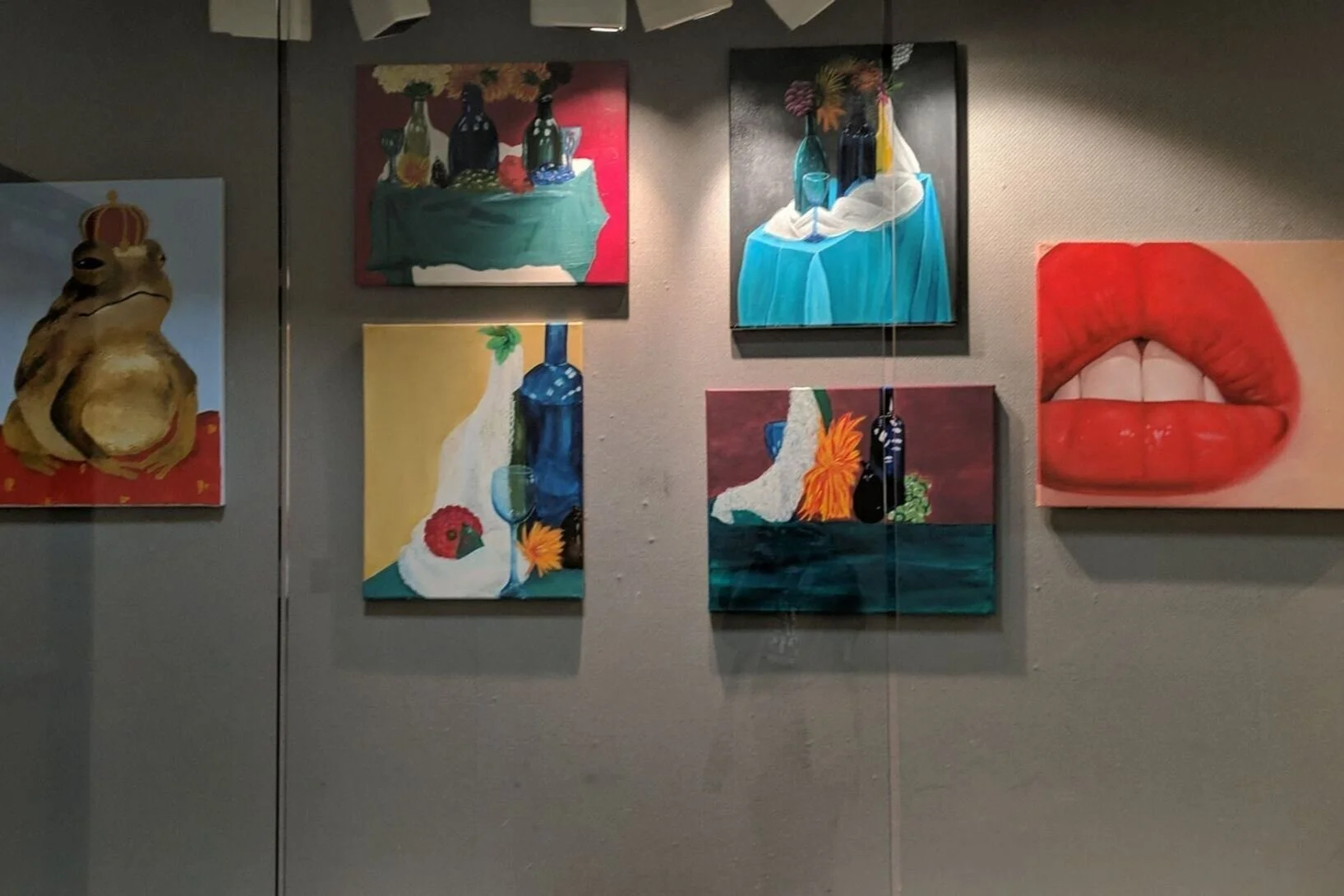

Writers often grapple with the dilemma of self-censorship to avoid offending family members or even the broader public. Concerns about explicit content, offensive language, or themes deemed unsuitable for certain age groups frequently lead to challenges and bans, as noted by the American Library Association. This internal conflict raises critical questions about the importance of preserving artistic integrity versus mitigating potential backlash. Self-censorship can stifle creativity and result in an inaccurate portrayal of societal issues, politics, and cultural trends. Notable works like Harper Lee’s To Kill a Mockingbird and Kate Chopin’s “The Awakening" have faced bans but serve as essential reflections of their times. Ultimately, writers must weigh the value of honest storytelling against the desire to avoid controversy, considering the long-term implications of their choices on literature and society.


25 Minutes On, 5 Minutes Off, 4 Times—It’s That Easy. When I first learned about the Pomodoro Technique, I probably thought the same thing as you—the Pomodoro what now? But as I learned more about it, it became an incredibly useful tool in writing projects.


Supporting emerging artists can prevent them from facing the common struggle of financial instability. Collaborating with new creatives, like hiring them for design, writing, or marketing tasks, benefits both parties by fostering growth and exchanging valuable services. This approach saves time, provides artists with opportunities, and strengthens the creative community. Offering honest reviews and testimonials further supports their credibility. By choosing collaboration over competition, professionals contribute to a thriving artistic ecosystem.
Publishing News & Insights
Are you an aspiring writer, blogger, journalist, book editor, literary agent, content creator, marketing specialist, or other publishing industry professional seeking a roadmap to help you find your way in the book world? I’ve got you covered! The Publishing News category of this blog is where I share publishing industry news, editorial insights and advice for writers, editors, agents, and other publishing professionals and I cover topics such as editing, marketing, querying, content creation, website development, as well as other areas of the publishing world. I like to think of this category as an umbrella for all things publishing.

Learn how CEOs and content creators with ADHD can thrive amid overwhelm and distraction. Discover practical ADHD-friendly systems—like daily planning tools, the Pomodoro Technique, and chunking strategies—from author Payton Hayes. Boost focus, eliminate burnout, and build sustainable routines that enhance leadership and productivity.

Literary agents play a pivotal role in an author's journey toward traditional publishing, especially with major New York publishing houses. They act as intermediaries between authors and publishers, leveraging their industry expertise to secure favorable book deals, negotiate fair contracts, protect writers' rights, and ensure accurate compensation. While securing an agent is often essential for mainstream fiction and popular nonfiction targeting large audiences, it may not be necessary for niche markets or academic works. Understanding the commercial viability of one's manuscript is crucial; not all books are suited for major publishers, and many find success with mid-size or independent presses. Aspiring authors should research market trends and maintain realistic expectations about their work's potential reach.
Public art, particularly murals, plays a significant role in enhancing urban spaces and fostering community identity. In Oklahoma, the process of creating murals involves collaboration between artists, city officials, and property owners. Legal considerations, including the Visual Artists Rights Act (VARA), protect artists’ rights and ensure their work is respected. Additionally, partnerships with local organizations and educational institutions provide opportunities for aspiring artists to gain experience. This dynamic environment encourages artistic expression while promoting cultural appreciation.
Building relationships with competitors can provide significant benefits in any industry. Rather than viewing others as threats, collaborating and exchanging knowledge can lead to mutual growth. Competitors often offer valuable insights, opportunities for collaboration, and the potential for referrals when workloads overflow. Additionally, forming genuine connections fosters a supportive network where professionals can learn from one another’s successes and mistakes. This mindset encourages shared learning, resource exchange, and creative partnerships that benefit everyone involved.
Writers often grapple with the dilemma of self-censorship to avoid offending family members or even the broader public. Concerns about explicit content, offensive language, or themes deemed unsuitable for certain age groups frequently lead to challenges and bans, as noted by the American Library Association. This internal conflict raises critical questions about the importance of preserving artistic integrity versus mitigating potential backlash. Self-censorship can stifle creativity and result in an inaccurate portrayal of societal issues, politics, and cultural trends. Notable works like Harper Lee’s To Kill a Mockingbird and Kate Chopin’s “The Awakening" have faced bans but serve as essential reflections of their times. Ultimately, writers must weigh the value of honest storytelling against the desire to avoid controversy, considering the long-term implications of their choices on literature and society.
Supporting emerging artists can prevent them from facing the common struggle of financial instability. Collaborating with new creatives, like hiring them for design, writing, or marketing tasks, benefits both parties by fostering growth and exchanging valuable services. This approach saves time, provides artists with opportunities, and strengthens the creative community. Offering honest reviews and testimonials further supports their credibility. By choosing collaboration over competition, professionals contribute to a thriving artistic ecosystem.
Arts & Culture
The Arts and Culture category of the blog is where all my creative worlds collide—art, journalism, and creative writing. Here, you’ll find blog posts on topics such as art, music, and entertainment. I’ll share my favorite artists, albums, exhibits, playlists, and more with artist spotlights, entertainment features, and everything else, related to the humanities can be found in artsy things!
Public art, particularly murals, plays a significant role in enhancing urban spaces and fostering community identity. In Oklahoma, the process of creating murals involves collaboration between artists, city officials, and property owners. Legal considerations, including the Visual Artists Rights Act (VARA), protect artists’ rights and ensure their work is respected. Additionally, partnerships with local organizations and educational institutions provide opportunities for aspiring artists to gain experience. This dynamic environment encourages artistic expression while promoting cultural appreciation.
Supporting emerging artists can prevent them from facing the common struggle of financial instability. Collaborating with new creatives, like hiring them for design, writing, or marketing tasks, benefits both parties by fostering growth and exchanging valuable services. This approach saves time, provides artists with opportunities, and strengthens the creative community. Offering honest reviews and testimonials further supports their credibility. By choosing collaboration over competition, professionals contribute to a thriving artistic ecosystem.
Academics & Professional Development
As a creative writer, freelance editor, and teacher, I have gathered quite a bit of reading, writing, and language knowledge over the years. The Academics & Professional Development category of the blog is dedicated to sharing what I’ve learned with students, parents, teachers, and administrators. In this section of the blog, you’ll find articles about the education system, blog posts about professional development, and guides for college prep.

A college admissions essay is more than just a standard essay; it's an opportunity to showcase one's character and individuality beyond academic records. A strong admissions essay can be compared to a compelling memoir, combining self-pride, self-awareness, and an engaging narrative. Applicants should be aware of the distinction between open and closed prompts, tailoring their responses accordingly. Applicants should also strive to adhere to word count and formatting guidelines (typically a minimum of 650 words and formatted according to MLA style, unless specified otherwise by the institution). Ultimately, the essay should serve as a platform to present oneself as an ideal student, making a compelling case for admission.
Want to take over this blog? Send me your guest post!
I do accept guest posts to this blog but they must contain original, relevant, previously unpublished, and exclusive content. Guest blog posts will be tagged with the Guest Blogs & Op-Eds tag, and will be attributed to the author, Guest Blogger and will include an author bio and photo along with backlinks to the author’s social media profiles inside each post. I do not accept guest post request from other websites or social media platforms. If you have a blog post idea or would like to collaborate, please send your guest post idea to me directly at Hello@PaytonHayes.com.
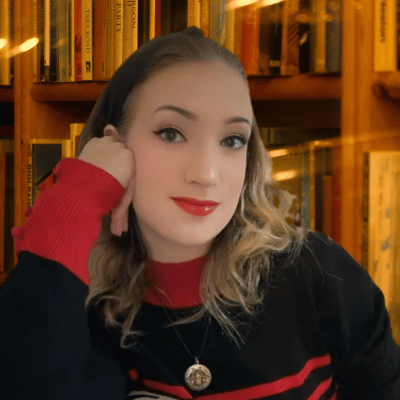
Hi, I’m Payton.
Whether you’re a returning reader or new visitor, welcome to my blog and thanks for stopping by! My blog posts cover a variety of topics from publishing news, writing advice, and book reviews, to slices of my life between the pages. So, grab a cup of your favorite cozy beverage and get comfy!
Search The Blog
Looking for a specific topic or tag? You can search the blog or check out popular search topics below!
Tags (A-Z)
A
B
Book of The Month
C
D
E
F
G
H
I
J
K
L
M
N
O
P
Publishing News
Q
R
S
T